November 27th, 2019
Benchmarking the scalability and performance of quantum computers
To scale or not to scale
November 2019: AQT researchers together with colleagues from the University of Innsbruck and the Institute for Quantum Computing (IQC), Waterloo, Canada have demonstrated a new method to benchmark different quantum computer platforms.
Quantum computers offer a fundamentally more powerful way of computing, thanks to quantum mechanics. Compared to a traditional or digital computer, quantum computers can solve certain types of problems more efficiently. However, qubits—the basic processing unit in a quantum computer—are fragile; any imperfection or source of noise in the system can cause errors that lead to incorrect solutions under a quantum computation. Gaining control over a small-scale quantum computer with just one or two qubits is the first step in a larger, more ambitious endeavour. A larger quantum computer may be able to perform increasingly complex tasks, like machine learning or simulating complex systems to discover new pharmaceutical drugs. Engineering a larger quantum computer is challenging; the spectrum of error pathways becomes more complicated as qubits are added and the quantum system scales.
The error problem
Characterizing a quantum system produces a profile of the noise and errors, indicating if the processor is actually performing the tasks or calculations it is being asked to do. To understand the performance of any existing quantum computer for a complex problem or to scale up a quantum computer by reducing errors, it is first necessary to characterize all significant errors affecting the system.
The Innsbruck researchers around AQT co-founders Rainer Blatt and Thomas Monz are developing a prototype quantum computer, where information is stored in single trapped atoms and manipulated with laser pulses. Their Canadian collaborators Prof. Joseph Emerson and Dr. Joel Wallman, at the Institute for Quantum Computing, are specializing on rigorous mathematical methods to quantify and verify errors in quantum computers.
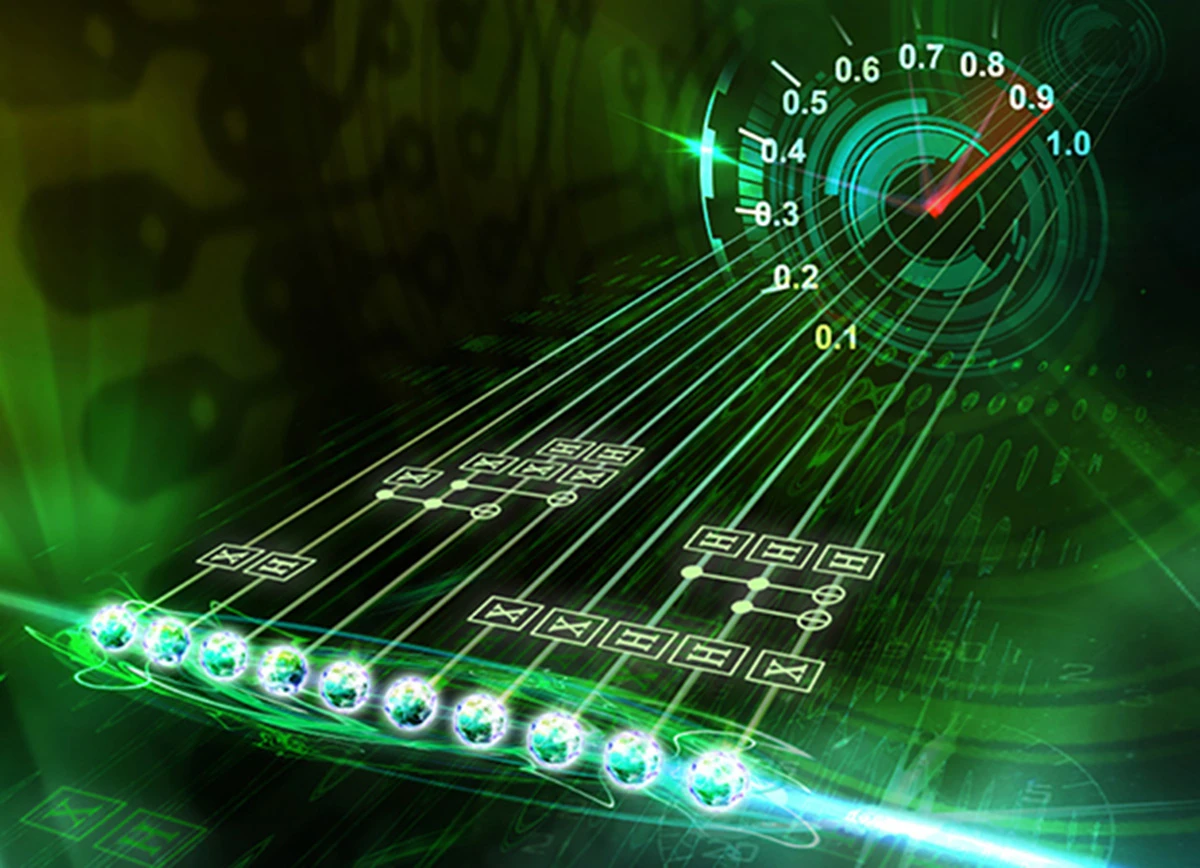
The group of researchers identified a method to assess all error rates affecting a quantum computer. They implemented this new technique for the ion trap quantum computer at the University of Innsbruck, and found that error rates do not increase as the size of that quantum computer scales up.
For more details, see here.
© Photocredit: H. Ritsch

June 2nd, 2026
On May 27th 2026, the CHAMP-ION consortium held its international opening event in Villach, Austria, bringing together leading stakeholders from across the European quantum technologies ecosystem.
May 5th, 2026
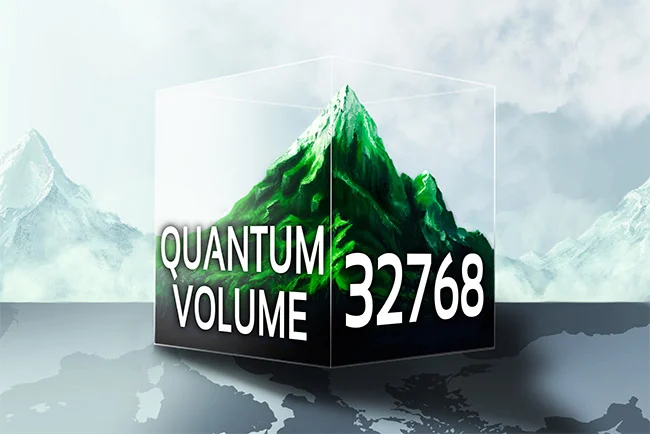
AQT’s unveils the LYNX Series, a new generation of 19-inch rack-mounted quantum computers that has officially achieved a record-breaking Quantum Volume (QV) of 32768. This sets a new milestone for a universal Quantum Computer that is designed, built, and located in Europe.
April 15th, 2026
By combining AQT’s powerful trapped-ion quantum computer hardware and easy-to-scale Horizon’s software, the two companies aim to accelerate users’ ability to build real-world quantum applications.